

On Keeping a Daily Spending Log
I've been keeping a spending log for over 8 years, and here's how it helps build a better relationship with money.

Many of us have had a journal at some point in our lives, or still do today. It's a fantastic tool to regularly track what we do and how we react to the world.
But when it comes to money, we usually don't keep such a diary that reflects our relationship with money.
In this short post, we'll discuss why keeping a spending log is helpful, how I've been managing one for the last 8 years, and how you can start one today.
Let's begin by understanding:
Why we should keep a daily spending log
Spending money is easy.
From the Internet to the physical world, companies are around every corner holding out a shiny new product that will lure us into opening up our wallets and handing over our cash.
Without being in touch with the ground reality of how we're spending our money every day, we can easily fall into a hole of spending away our entire income or worse, spending more money than we can afford by taking on unnecessary debt.
This is where a spending log fits in.
When we log our expenses regularly, we become more conscious about our spending, which in turn helps us spend more intentionally on things that we actually need or want instead of buying stuff on autopilot.
The continuous feedback from a daily log makes us better at spending money.
Now, if you're thinking that maintaining such a daily log is cumbersome, I can tell from experience that it's not as tedious as you might think.
I've been maintaining one for over 8 years, and here's how I do it:
Log expenses right after it happens
I've built a habit of immediately logging an expense after I spend money anywhere. It takes a minute or two, and by now it has become an automatic habit.
As soon as I make a purchase, I open the Ducat iOS app and describe the purchase:
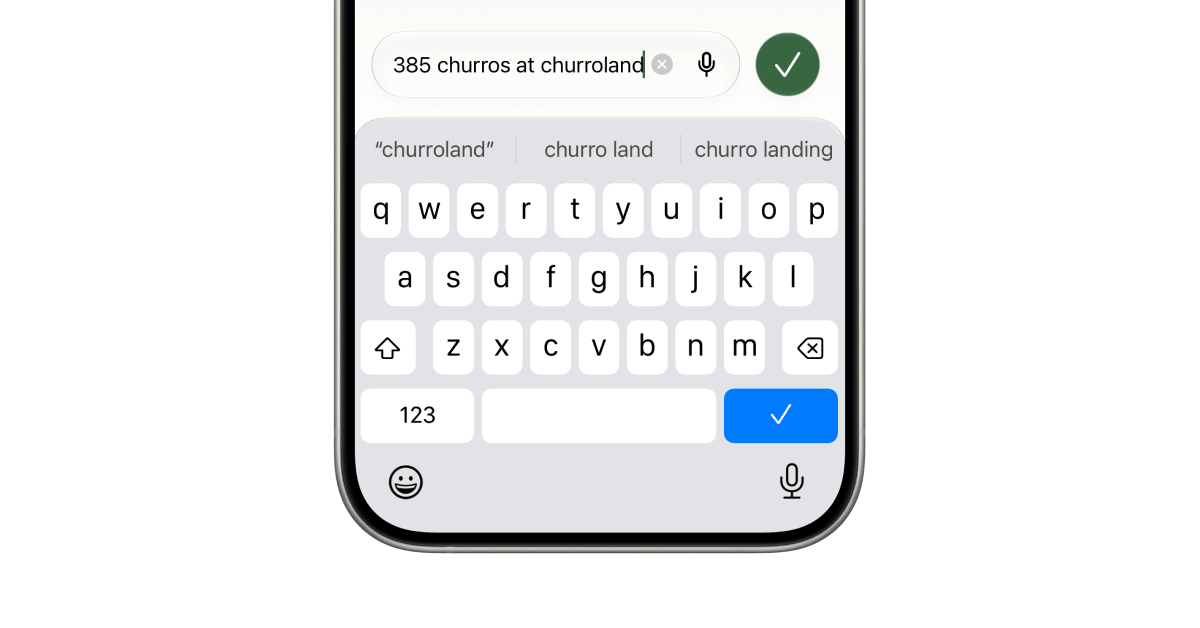
Or if I'm on my laptop, I use the Web app or the Raycast extension to log the expense.
Either way, the entire process takes less than 2 minutes, and by the end of the day, I have a well-formatted spending journal as a result:
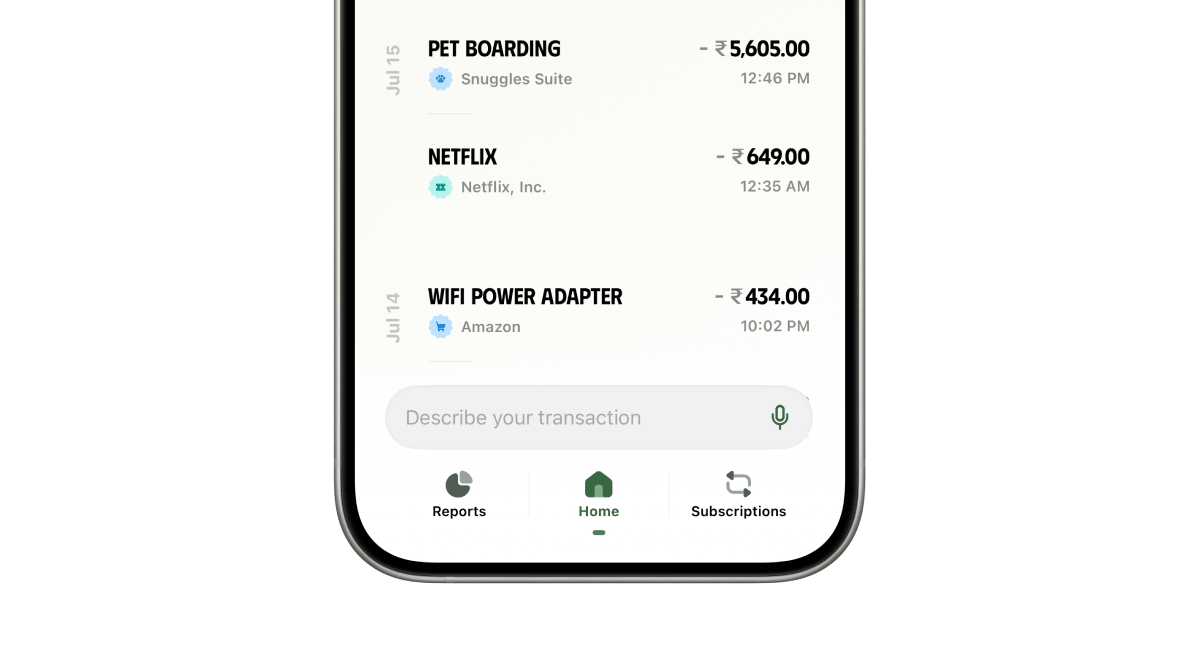
When logging, I try to be as descriptive as I can because detailed notes on what the expenses actually were for make it easier to understand and sift through our spending later.
Generic notes such as “shopping” don't help as they're too vague to understand what we actually spent the money on.
Whereas logging a notebook purchase as “pocket notebook” helps identify whether we're buying too many pocket notebooks and hoarding them for no reason.
Now, while this is how I primarily log expenses, sometimes I might be in a hurry or don't have the opportunity to log the expense right away.
In such cases, I:
Log remaining expenses at the end of the day
At the end of each day, I quickly check the Messages app on my phone to see if there are any transactions that I haven't logged, and take a few minutes to capture the missing ones.
This works well because most of our spending nowadays happens via digital payments such as credit cards or bank transfers, and there's a paper trail.
This might not be a viable solution if you're paying in cash, as it can be difficult to remember everything you spent money on throughout the day.
I usually keep the transaction messages from my bank marked unread if I'm not logging the spend right away, which makes it easier to find the unrecorded transactions.
To make this a habit, I have set up a daily reminder in the Ducat iOS app to remind me to log any pending spends at around 8 PM every day:
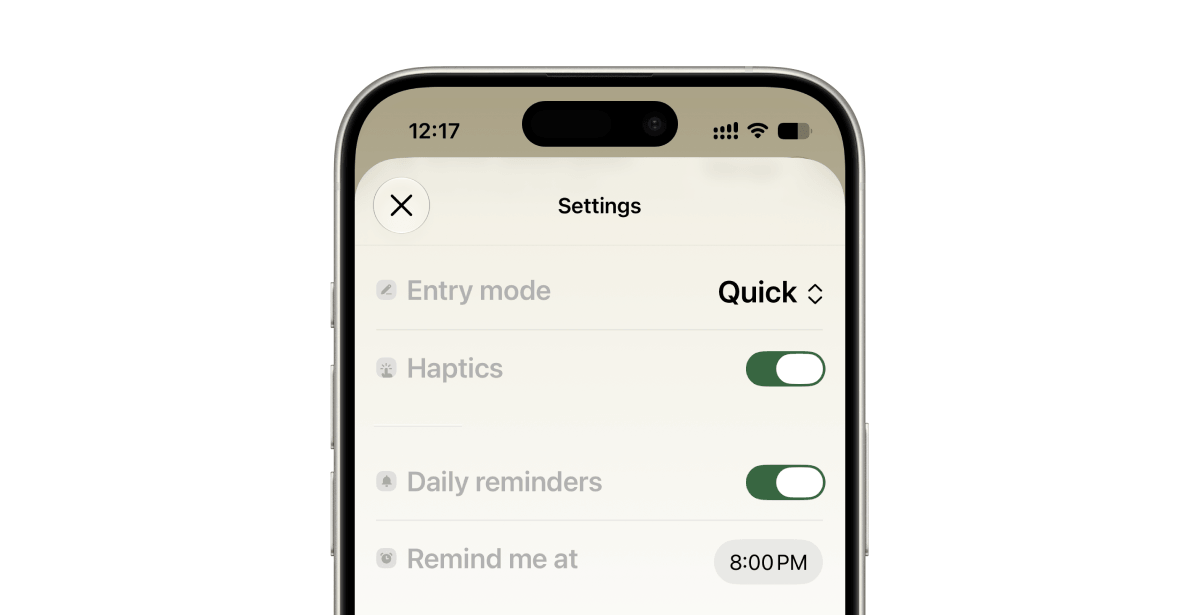
If the end of the day doesn't work for you, you can try logging everything the following day.
But don't delay logging your spending for too long, as over time, we lose the full context of our spending if we don't log it while it's fresh.
So, now that we've discussed how to keep a daily spending log, the next question is:
Where to start?
At a glance, this might look like a commitment you're not ready for.
But after tracking my money for nearly a decade, I can tell you won't regret this tiny habit, and it'll help you build a better relationship with money.
If you're feeling intimidated by the process, scope it as a small experiment you want to run for a month or less.
You can use your notes app or a spreadsheet, but an app like Ducat, especially the iOS app, makes tracking and visualising much easier and more fun.
Pick one of the logging techniques we discussed in this post, log right after the purchase or reconcile at the end of the day, and start now.
You don't have to wait till next month or week to start. Start today.
Don't worry too much about whether tracking the data is helping you right away; track consistently for at least a few weeks to allow the process to work.
Once you get into this habit, you'll start spending your money more consciously even before you've had the chance to review your spending reports formally.
It's better experienced than read about, so start your spending journal today.