

Setting up your account
This guide will help you set up your Ducat transaction account in minutes.
When you register for a Ducat account, the app automatically creates a transaction account for you, which contains your logged transactions and subscriptions.
But before you can start logging transactions, you need to set up your account with an initial balance and currency:
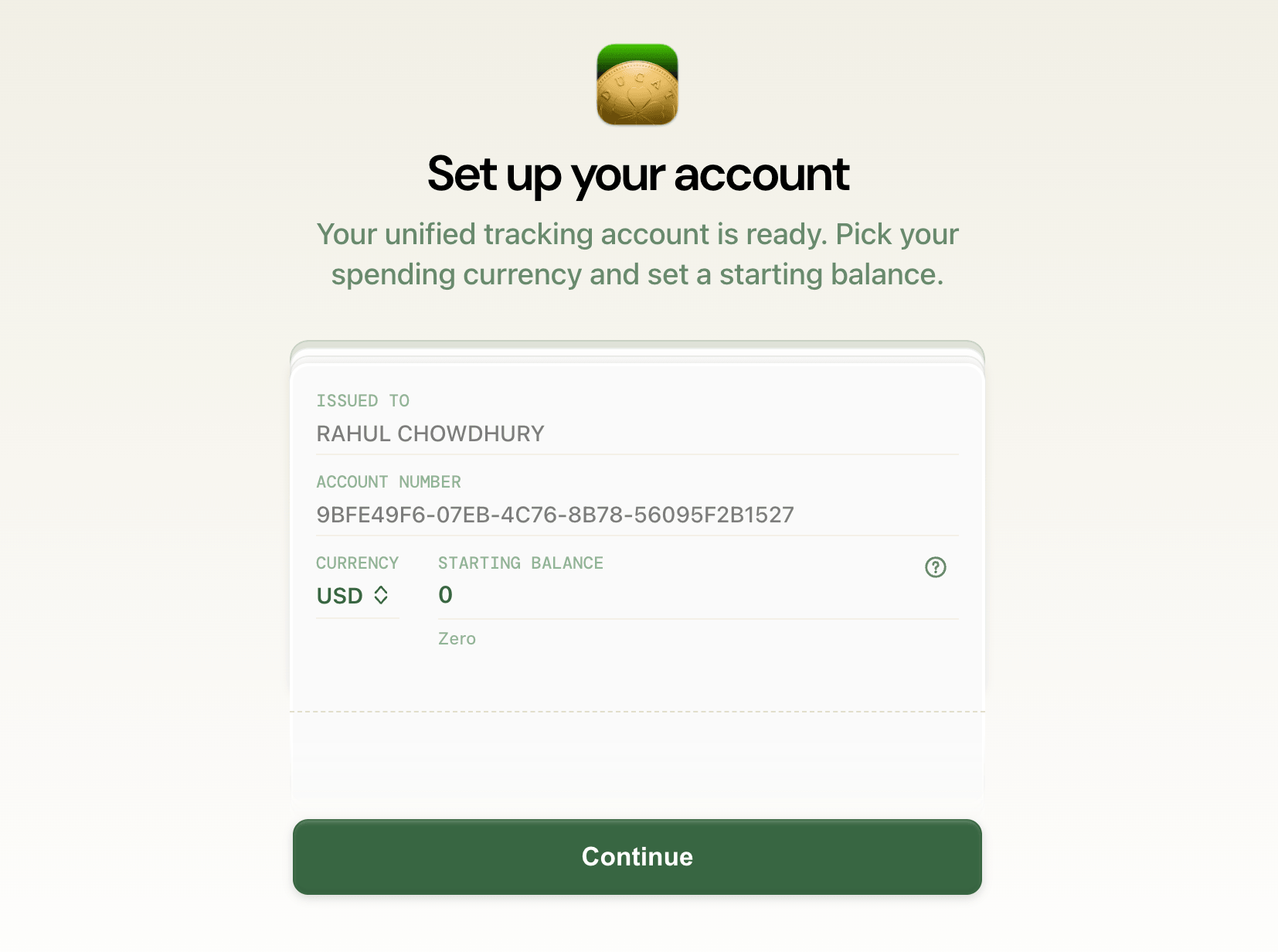
Understanding your unified account
Ducat works on a unified account model.
This means that every transaction, income and expense, gets logged at the same place, and your combined spending balance gets updated.
This approach makes things simple.
You don't have to worry about remembering which account you made a transaction from when logging your spending, since this extra information is rarely useful for identifying spending habits anyway.
The account starts with a combined balance of your actual bank accounts and gets updated automatically as you log new expenses and income.
The combined balance reflects your overall financial state at any moment.
What to set
Let's start with the account currency:
Set your account currency to your home currency or the one you use most for transactions.
For example, if you're in France, and you pay for your regular expenses and earn an income in EUR, then that should be your unified account's currency:
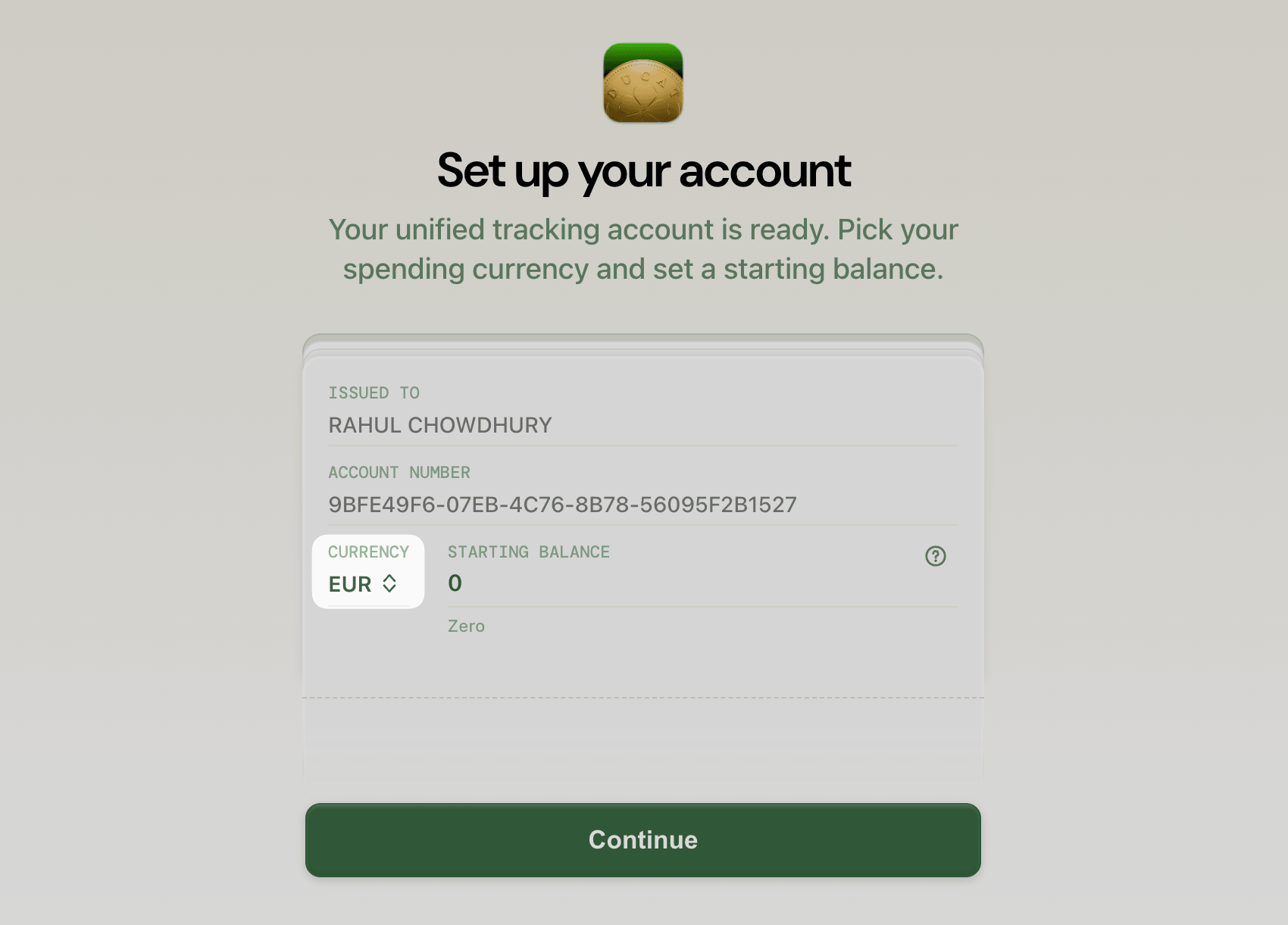
Note: Once set, an account currency can't be changed later, as this will disrupt the existing transaction history of your account.
For the account balance, take a few minutes to round up the bank accounts that you use to pay for your expenses and receive any incoming money.
If you have more than one such account, calculate the sum of your present balance across these accounts and set your unified account balance to the total:
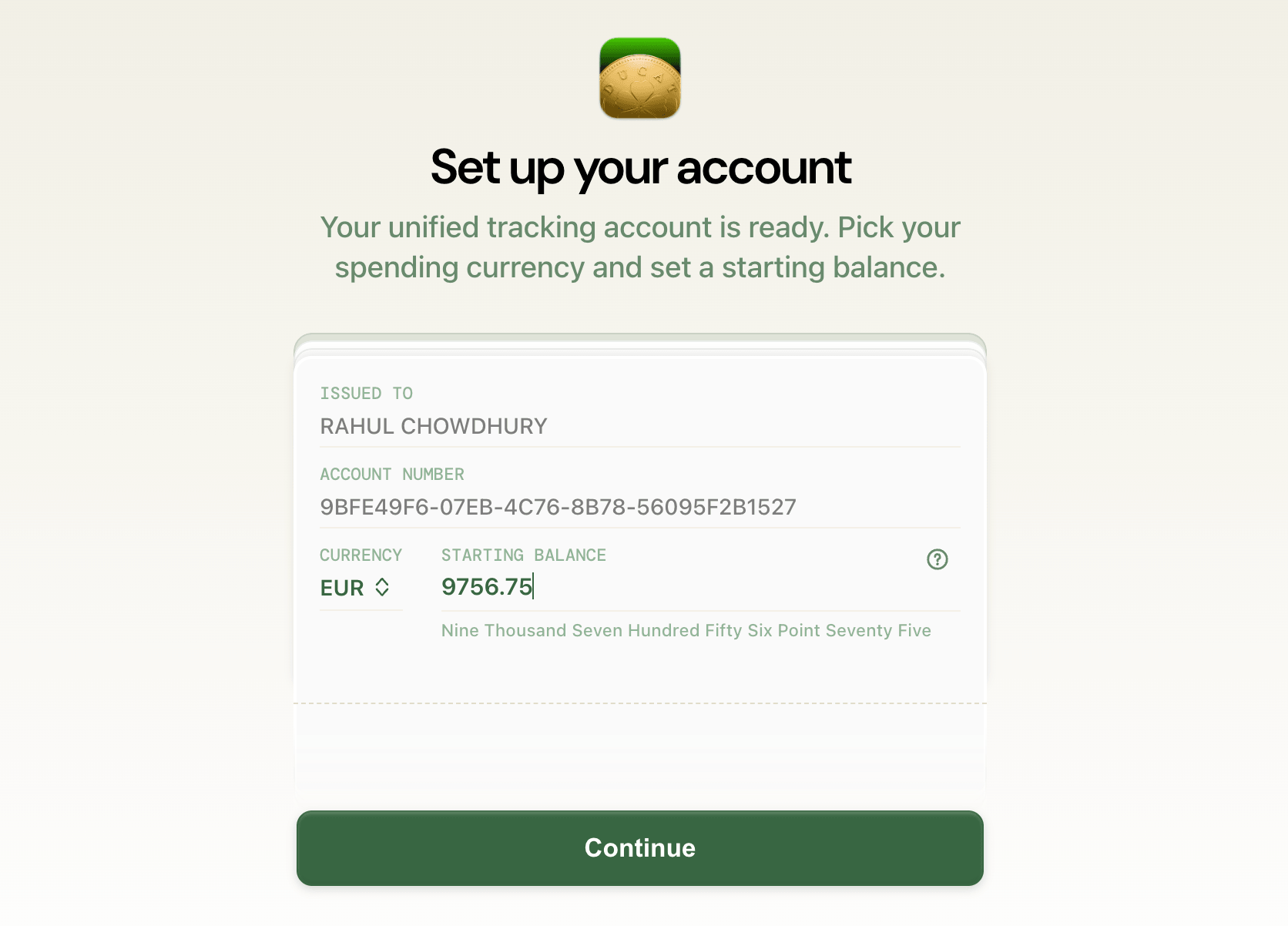
It's best not to include any credit card or overdraft limits and other non-liquid assets such as stock market investments here.
This account balance shouldn't aim to mirror your net worth. Instead, this should reflect your current spending power.
An example scenario
Let's assume I have two bank accounts and two credit cards that I use to pay for my monthly expenses and receive a salary in one of the bank accounts.
The first account has a balance of ₹100,000, and the second, ₹45,000. Each credit card has a limit of ₹200,000.
My unified account balance in this case would be ₹145,000.
This balance reflects my financial ability to pay for any expenses and credit card bills at the moment.
A negative balance means I've spent more money than I have and will need income to pay for additional expenses and to clear any outstanding credit card bills.
Therefore, at any time, the combined account balance reflects my financial solvency.
Start now, update later
If you don't have your account balances handy at the time of registration, set the account balance to an approximate amount or one of your bank account balances.
You can always adjust your balance later.
Need more help?
Email your question or issue and we’ll get back to you shortly.
Send an email